

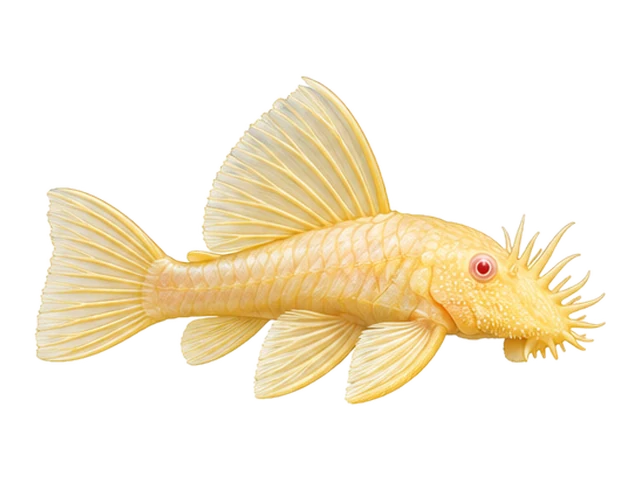
Breeding the albino bristlenose pleco
Very easy; a cave spawner, with the male guarding the eggs and young. Fry often appear in mature tanks without help.
Step by step
Grow out 6-8 juveniles and let a pair form; keep the group in a well-oxygenated, stable tank.
100-200 L tank with strong flow, many caves sized to the fish (PVC or ceramic tubes), and very clean, warm water.
Cool water changes, increased flow and a seasonal drop in temperature, plus rich protein feeding.
The male guards a small clutch (5-30 large amber eggs) in the cave for around 5-10 days until they hatch; the fry carry a big yolk sac.
Fry stay in the cave until the yolk is gone, then feed on sinking algae wafers, blanched veg and crushed flake. Keep nitrate low.
- Too few caves
- Warm, stagnant water
- Moving the male while he guards eggs
Male or female
Adult males grow fleshy tentacles (bristles) on the head and strong odontodes on the pectoral fins and gill covers; females lack these.
Can I breed it in my tank?
- Good for a first breeding project.
Day-by-day plan
Typical for cave spawners
- 21 days beforeSet up caves
Give one cave per pair or female, plus a varied diet.
- Day 0Spawning in the cave
Eggs are laid inside the cave and guarded, usually by the male.
- Day 4Eggs hatch
Eggs hatch in 3–7 days depending on the species and temperature.
- Day 10Fry leave the cave
Feed baby brine shrimp and crushed food. Plecos need wood and vegetables.
- Day 60Grow-out
Fry grow on in their own tank.
A general guide for this breeding type. Days change with temperature and species.
Simulator: guided
Give one cave per pair or female, plus a varied diet.
Simulator: try it yourself
Set up a virtual breeding tank and see what would likely happen.
- Without live or frozen food the parents aren't in breeding condition.
- Corydoras usually need a big, cooler water change (like rain) to start spawning.
An educational estimate from the breeding rules, not a promise.