

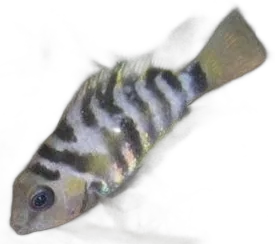
Breeding the convict cichlid
Spawns readily on cleaned rock surfaces or in caves such as clay flowerpots, then moves the fry into pits dug in the substrate. Both parents guard eggs and fry for several weeks.
Step by step
Buy a group and let pairs form. They spawn very easily.
A 20 gallon (75 L) tank with a cave or flowerpot, 24-28 C.
Warm water and good food. A pair claims a cave.
Usually about 100-150 eggs, up to 300; they hatch in about 3 days (3-4 days), and fry swim freely after another 4-7 days.
Feed baby brine shrimp and crushed flake. Parents guard fry well. Remove other fish. Separate when fry reach 3-4 cm.
- Keeping with fish that are too small
- Overbreeding and flooding the market
- Fish fighting hard
Male or female
Males grow larger, with pointed dorsal and anal fins and sometimes a forehead (nuchal) hump. Females are more colourful, with pink to orange on the belly and a dark spot in the dorsal fin.
Can I breed it in my tank?
- Good for a first breeding project.
Day-by-day plan
Typical for cave spawners
- 21 days beforeSet up caves
Give one cave per pair or female, plus a varied diet.
- Day 0Spawning in the cave
Eggs are laid inside the cave and guarded, usually by the male.
- Day 4Eggs hatch
Eggs hatch in 3–7 days depending on the species and temperature.
- Day 10Fry leave the cave
Feed baby brine shrimp and crushed food. Plecos need wood and vegetables.
- Day 60Grow-out
Fry grow on in their own tank.
A general guide for this breeding type. Days change with temperature and species.
Simulator: guided
Give one cave per pair or female, plus a varied diet.
Simulator: try it yourself
Set up a virtual breeding tank and see what would likely happen.
- Without live or frozen food the parents aren't in breeding condition.
An educational estimate from the breeding rules, not a promise.