

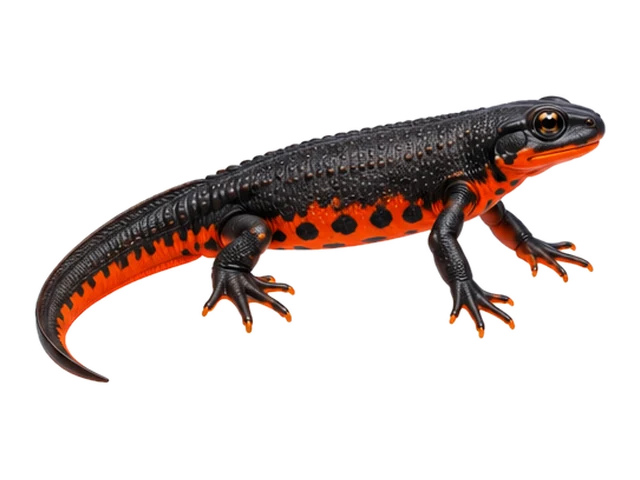
Breeding the japanese fire-bellied newt
Breeds in spring to early summer (April-June in the wild) after a tail-fanning courtship; the female lays eggs one at a time, folding each into the leaves of water plants. A winter cool-down of 5-8 °C helps but is not essential.
Step by step
Keep groups with equal sexes.
Aquarium with plants and a land area.
Cool winter followed by spring warming.
About 100-400 eggs per season laid singly (AmphibiaWeb: about 200); they hatch in about 20 days and larvae metamorphose after about 3-6 months.
Larvae eat daphnia and brine shrimp; metamorphose in months.
- Warm water
- Dirty tank
- Fish tankmates
Male or female
Males are smaller, with a swollen cloaca and a flatter, wider tail; in the breeding season they develop smoother skin, a bluish-purple tail sheen and a thin filament at the tail tip (absent in some populations). Females are larger.
Can I breed it in my tank?
- Good for a first breeding project.
Day-by-day plan
Typical for frogs, newts and turtles
- Day 0Eggs
Needs a special setup. Read the species guide first.
A general guide for this breeding type. Days change with temperature and species.
Simulator: guided
Needs a special setup. Read the species guide first.
Simulator: try it yourself
Set up a virtual breeding tank and see what would likely happen.
- Without live or frozen food the parents aren't in breeding condition.
An educational estimate from the breeding rules, not a promise.