

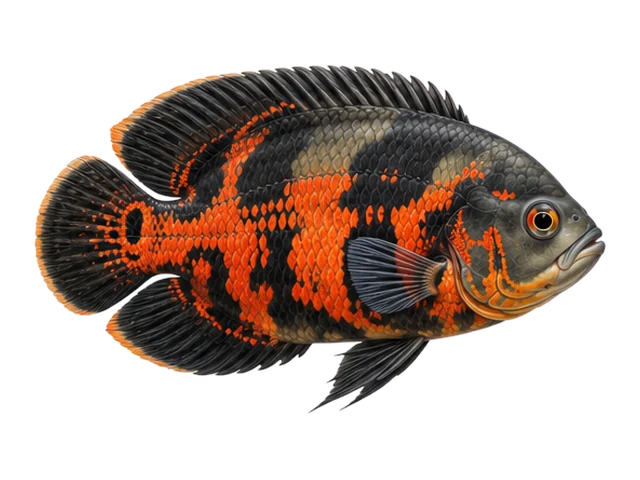
Breeding the oscar
Both sexes clean a flat spawning site and both parents guard the eggs. After hatching they move the fry into a shallow pit in the sand. Get a pair by growing on six or more young fish.
Step by step
Buy 6 young fish and let them pair up. Pairs are often visible by 2 years.
A 125+ gallon (470 L) tank with a flat rock or slate, 26-28 C. Large pairs need a big tank.
Big water changes, warm water and rich food.
Up to about 2000 eggs per spawning; they hatch in 3-4 days, then fry stay in a pit guarded by the parents for 6-7 days.
Feed baby brine shrimp, then crushed pellets. Remove fry or leave with the parents. Sort fry often as they grow fast.
- Using a tank that is too small
- Pairing two males
- Not removing aggressive pairs
Male or female
Oscars show no reliable external differences between the sexes; the breeding tube can only be seen at spawning time.
Can I breed it in my tank?
- Good for a first breeding project.
Day-by-day plan
Typical for open substrate spawners
- 21 days beforeLet a pair form
Grow up a group and let a pair choose each other. Give them a flat stone or broad leaf.
- Day 0Spawning
The pair cleans the stone and lays rows of eggs. Both guard them.
- Day 3Eggs hatch
Wrigglers hatch in 2–4 days and are moved to pits by the parents.
- Day 7Free swimming
Feed baby brine shrimp several times a day. Parents often herd the fry.
- Day 42Grow-out
Move fry to a grow-out tank before the parents spawn again.
A general guide for this breeding type. Days change with temperature and species.
Simulator: guided
Grow up a group and let a pair choose each other. Give them a flat stone or broad leaf.
Simulator: try it yourself
Set up a virtual breeding tank and see what would likely happen.
- Without live or frozen food the parents aren't in breeding condition.
An educational estimate from the breeding rules, not a promise.