

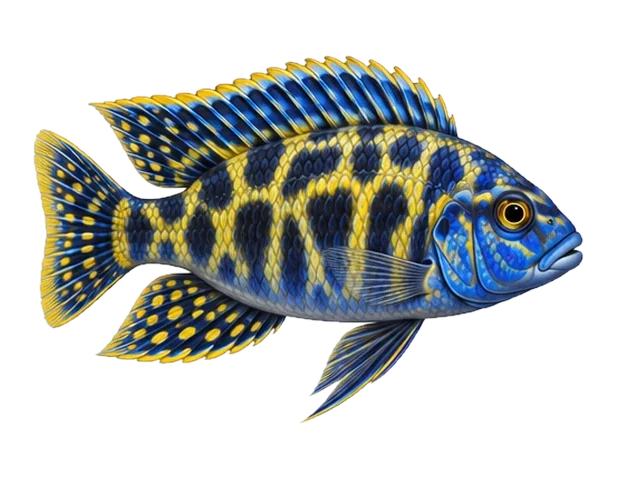
Breeding the venustus cichlid
Polygamous maternal mouthbrooder; one male with 3-6 females. The female carries the brood about 3 weeks, then guards the fry for about 10 more days, taking them back into her mouth when disturbed.
Step by step
One male with 3-5 females in a large tank with open sand; males guard a sand scrape or cave.
400+ L tank with a sand floor, rockwork with caves and open swimming space, hard alkaline water (pH 7.8-8.6) and strong filtration.
Large water changes, varied protein foods and a dominant male displaying in a sand nest or cave.
Up to about 120 eggs, carried by the female for around 3 weeks.
The female releases fry after about 3 weeks. Feed crushed flake and newly hatched brine shrimp; sort by size often as fry grow unevenly and larger siblings eat smaller ones.
- Tank too small for adults
- Keeping with small fish that become food
- Not sorting fry by size
Male or female
Males grow larger and are more colourful, with blue and yellow on the body that intensifies when breeding; females are plainer with the dark blotched pattern.
Can I breed it in my tank?
- Good for a first breeding project.
Day-by-day plan
Typical for mouthbrooders
- 21 days beforeGroup and condition
Usually one male with several females. Feed high-quality food.
- Day 0Spawning
The female takes the eggs into her mouth and stops eating.
- Day 21Release
After about 3 weeks the female releases fully formed fry. Many breeders move her to a quiet tank first.
- Day 21First food
Fry eat crushed flake and baby brine shrimp straight away.
- Day 90Grow-out
Fry are a few centimetres long after about 3 months.
A general guide for this breeding type. Days change with temperature and species.
Simulator: guided
Usually one male with several females. Feed high-quality food.
Simulator: try it yourself
Set up a virtual breeding tank and see what would likely happen.
- Without live or frozen food the parents aren't in breeding condition.
An educational estimate from the breeding rules, not a promise.