

Variations
1 kinds · tap one for a closer look
Emperor tetra
Peaceful; males spar mildly.
- Tinfoil barb eats animals up to about 5 cm. Emperor tetra only grows to 4.2 cm.
- White cloud mountain minnow needs cool water and makes a lot of waste, while Emperor tetra is tropical.
- They need different temperatures (23–27 °C vs 14–22 °C). No setting suits both.
- Giant gourami eats animals up to about 10 cm. Emperor tetra only grows to 4.2 cm.
- Only a narrow temperature range suits both: 23–24 °C.
- Only a narrow temperature range suits both: 23–24 °C.
396 species in our list are a good match.
Care and water
Behavior
Peaceful; males spar mildly.
Food
Flakes, frozen foods.
Tap a food to see what it is.
Male or female
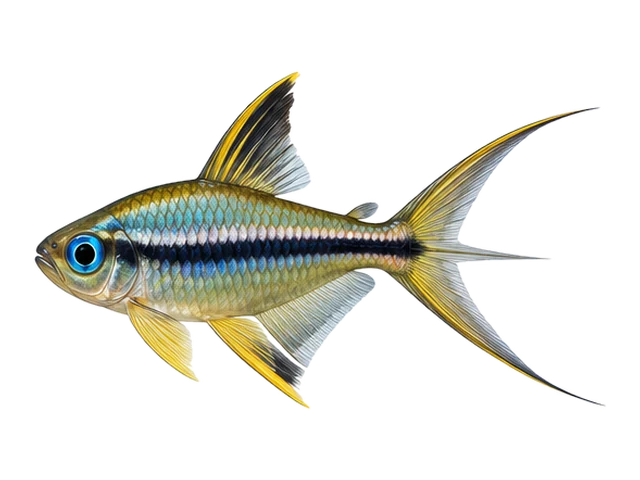
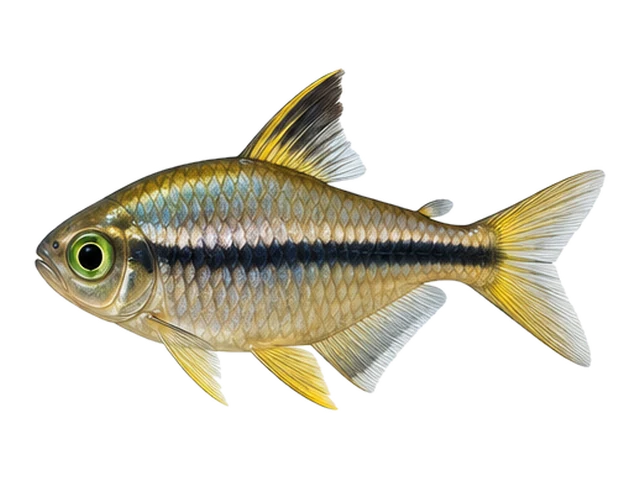
Males are larger and more colourful, with long extended dorsal, anal and caudal fins (the tail has a long middle ray), and a blue iris; females have a green iris.
Health
Common problems. Tap one to see the signs. This is a guide, not a diagnosis.
Breeding
Egg-scatterer · Moderate
Egg scatterer, best spawned in pairs in a separate, very dimly lit tank with fine-leaved plants or mops and soft, acidic water (pH 6.0-7.0, gH 1-10, 24-26.5 °C). Adults eat the eggs, so remove them once eggs are seen.
Buy a group of 6 or more and let them pair up. Males are larger with long fins.
40 L tank with soft, slightly acidic water, mops or plants and dim light.
Warm, soft water and good feeding.
Eggs hatch in 24-36 hours and fry are free-swimming 4-5 days later.
Feed infusoria or green water for days 1-3, then newly hatched brine shrimp and microworms. Keep light low early on. Grow out in a larger tank once fish are about 1 cm.
- Hard water
- Leaving parents with eggs
- Bright light
Where it lives in the wild
The story of the emperor tetra
From the San Juan and Atrato basins of western Colombia; described by Carl H. Eigenmann in 1911 and named after the collector Mervyn G. Palmer. Mature males grow extended fins, with a long middle ray in the tail. Virtually all emperor tetras in the trade are captive-bred.
Carl H. Eigenmann described the emperor tetra in 1911 from western Colombia. Its range lies west of the Andes, far from the Amazon tetras. Its violet sheen and three-pointed tail in males made it a favourite of aquarists.
First described by Carl H. Eigenmann in 1911.
- Males have a central tail extension, giving a trident-shaped tail.
- It lives on the Pacific side of the Andes, unlike most aquarium tetras.
- It is peaceful and does well in planted community tanks.
Sources
16 facts checked with sources
- Scientific name
Described by Eigenmann, 1911. Seriously Fish says the 'black emperor tetra' (N. "amphiloxus") is considered by most experts a colour morph of this species. Often confused in shops with Inpaichthys kerri (royal/purple emperor tetra), which is smaller, lacks the fin extensions and has an adipose fin; and with N. lacortei (rainbow emperor), whose males have a red iris instead of blue.
FishBase: Nematobrycon palmeri summary · Seriously Fish: Nematobrycon palmeri - Familycorrected
Legacy has no family. After the 2024 split of Characidae (Melo et al. 2024) FishBase places Nematobrycon in Acestrorhamphidae, subfamily Rhoadsiinae. Seriously Fish still uses Characidae. FishBase preferred for taxonomy.
FishBase: Nematobrycon palmeri summary · Wikipedia: Nematobrycon palmeri · Seriously Fish: Nematobrycon palmeri - Sizecorrected
Both sources give 4.2 cm SL (standard length, without the tail). The legacy 5 cm is plausible as a total length including the extended caudal fin of males, but no source gives a TL figure.
FishBase: Nematobrycon palmeri summary · Seriously Fish: Nematobrycon palmeri - TemperatureSeriously Fish: Nematobrycon palmeri · FishBase: Nematobrycon palmeri summary
- pH
Matches Seriously Fish exactly; FishBase allows up to 8.0.
Seriously Fish: Nematobrycon palmeri · FishBase: Nematobrycon palmeri summary - Hardnesscorrected
New value (legacy has none). Seriously Fish preferred for husbandry; FishBase gives 5-19 dH.
Seriously Fish: Nematobrycon palmeri · FishBase: Nematobrycon palmeri summary - Smallest tank
90 x 30 cm base x 30 cm height = 81 L (Seriously Fish lists ~81 litres). Legacy 80 L agrees within rounding. FishBase gives an 80 cm minimum tank length.
Seriously Fish: Nematobrycon palmeri · FishBase: Nematobrycon palmeri summary - Group size
Seriously Fish prefers 10 or more.
Seriously Fish: Nematobrycon palmeri · FishBase: Nematobrycon palmeri summary - Temperament
Peaceful; rival males spar mildly (matches legacy 'behave').
Seriously Fish: Nematobrycon palmeri - Swimming level
No source names a swimming level; FishBase only says pelagic (open water).
FishBase: Nematobrycon palmeri summary - Care level
Seriously Fish calls it hardy and a good choice for newcomers.
Seriously Fish: Nematobrycon palmeri - Where it livescorrected
Legacy has no range field; its 'about' text says only 'From Colombia', which agrees.
Seriously Fish: Nematobrycon palmeri · FishBase: Nematobrycon palmeri summary - Male or female
Legacy eye-colour clue verified.
Seriously Fish: Nematobrycon palmeri - Breeding
Legacy breeding setup (soft, slightly acidic water, mops, dim light, remove parents) agrees with Seriously Fish.
Seriously Fish: Nematobrycon palmeri - Eggs and youngcorrected
Legacy 'hatch in 5-6 days' is wrong: eggs hatch in 24-36 h; the 4-5 days is time to free-swimming. Egg count (30-100) not found in any source.
Seriously Fish: Nematobrycon palmeri - Story
Legacy claims verified. The Palmer etymology comes from Wikipedia only (Seriously Fish's etymology section is empty); primary not checked. 'Trident-shaped' is a description, consistent with Seriously Fish's extended caudal fin.
Seriously Fish: Nematobrycon palmeri · Wikipedia: Nematobrycon palmeri