

Variations
3 kinds · tap one for a closer look
Rosy barb
Busy; may nip fins and nibble soft plants.
- Rosy barb nips fins, and Congo tetra has long fins.
- Only a narrow temperature range suits both: 23–24 °C.
- Rosy barb nips fins, and Guppy has long fins.
- Rosy barb nips fins, and Betta has long fins.
- Only a narrow temperature range suits both: exactly 24 °C.
- Only a narrow temperature range suits both: 23–24 °C.
- Only a narrow temperature range suits both: exactly 24 °C.
293 species in our list are a good match.
Care and water
Behavior
Busy; may nip fins and nibble soft plants.
Food
Flakes, pellets, vegetables.
Tap a food to see what it is.
Male or female
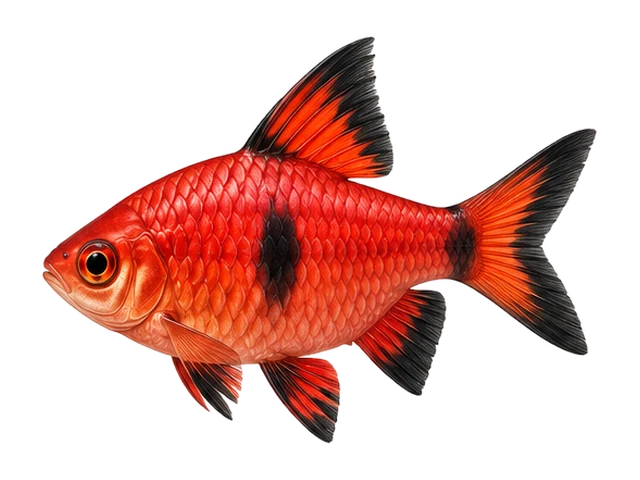
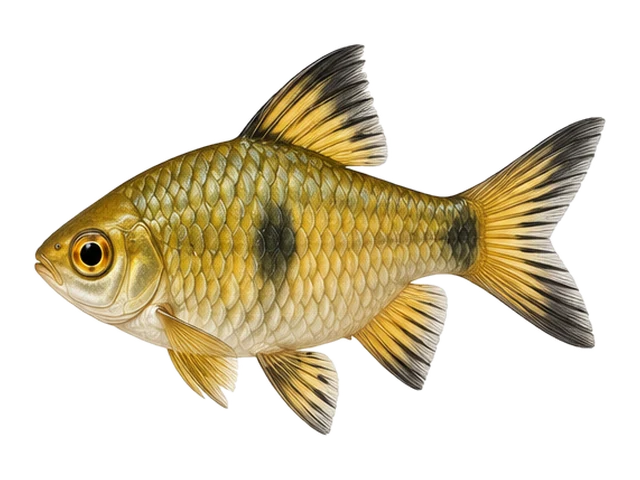
Adult males are smaller, slimmer and much more colourful than females, and have black in the fins; females have no black in their fins and are plumper.
Health
Common problems. Tap one to see the signs. This is a guide, not a diagnosis.
Breeding
Egg-scatterer · Easy
Prolific egg scatterer, easy to spawn. Use a separate tank with mature water; adults eat the eggs.
Buy a group of 6-8 and condition them.
40-60 L tank with plants or mops and a spawning grate. Dim light.
Warm water change and live foods.
Several hundred eggs per spawning; eggs hatch in 24-48 hours and fry are free-swimming about 24 hours later.
Feed infusoria or liquid food for days 1-3, then baby brine shrimp and microworms. Grow out with frequent water changes. Sort by size to cut losses.
- Leaving parents with eggs
- Too little cover
- Overfeeding
Where it lives in the wild
The story of the rosy barb
One of the hardiest barbs, tolerating cool water. Selective breeding has produced long-finned ('veil-tail'), 'super red', 'neon' and golden strains.
Francis Hamilton (also known as Buchanan-Hamilton) described this barb in 1822 in his survey of Ganges fishes. It is one of the oldest aquarium barbs and tolerates cool water. Long-finned and neon-red varieties have been bred in captivity.
First described by Francis Hamilton in 1822.
- It tolerates unheated tanks better than most tropical barbs.
- Males flush a vivid rosy red when spawning.
- Hamilton described it in an 1822 book on the fishes of the Ganges.
Sources
17 facts checked with sources
- Scientific name
Described by Hamilton, 1822. Formerly Puntius conchonius (still common in shops and older books); moved to Pethia by Pethiyagoda et al. 2012.
FishBase: Pethia conchonius summary · Seriously Fish: Pethia conchonius - Familycorrected
New value (legacy has none). FishBase places it in subfamily Smiliogastrinae.
FishBase: Pethia conchonius summary · Seriously Fish: Pethia conchonius - Size
Legacy 10 cm matches Seriously Fish's 10 cm SL (standard length). FishBase gives a maximum of 14 cm TL (total length, including tail); typical aquarium fish are smaller.
Seriously Fish: Pethia conchonius · FishBase: Pethia conchonius summary - Temperaturecorrected
Seriously Fish (preferred for husbandry) 16-24 °C; FishBase 18-22 °C. Both put the top below the legacy 25 °C. A subtropical / cool-water fish.
Seriously Fish: Pethia conchonius · FishBase: Pethia conchonius summary - pHSeriously Fish: Pethia conchonius · FishBase: Pethia conchonius summary
- Hardnesscorrected
New value (legacy has none).
Seriously Fish: Pethia conchonius · FishBase: Pethia conchonius summary - Smallest tankcorrected
100 x 30 cm base x 30 cm height = 90 L; Seriously Fish lists ~90 litres. Legacy 120 L is more generous than the sourced minimum.
Seriously Fish: Pethia conchonius - Group sizecorrected
Seriously Fish recommends 8-10 or more.
Seriously Fish: Pethia conchonius - Lifespan
Only Wikipedia gives a figure (up to 5 years, matching legacy); its primary source was not checked, so left unknown. Not on FishBase or Seriously Fish.
Wikipedia: Rosy barb - Temperamentcorrected
Sources disagree. Seriously Fish (preferred for husbandry) calls it generally peaceful and does not mention fin-nipping; Wikipedia says it can nip fins. Legacy 'semi-aggressive' and the nip flag are defensible as a caution, but the preferred source says peaceful.
Seriously Fish: Pethia conchonius · Wikipedia: Rosy barb - Swimming level
No source names a swimming level.
FishBase: Pethia conchonius summary - Care levelSeriously Fish: Pethia conchonius · FishBase: Pethia conchonius summary
- Where it livescorrected
New value (legacy has none). FishBase also reports it from Myanmar and notes introductions worldwide.
Seriously Fish: Pethia conchonius · FishBase: Pethia conchonius summary - Male or female
Colour difference and black fin markings verified. The exact colours (rosy red male, gold-olive female) were not stated in the sources checked.
Seriously Fish: Pethia conchonius · Wikipedia: Rosy barb - BreedingFishBase: Pethia conchonius summary · Seriously Fish: Pethia conchonius
- Eggs and young
Hatch time from Seriously Fish; egg count from Wikipedia only.
Seriously Fish: Pethia conchonius · Wikipedia: Rosy barb - Story
Legacy variants (neon/red, long-fin) are confirmed as selectively bred strains.
FishBase: Pethia conchonius summary · Seriously Fish: Pethia conchonius