

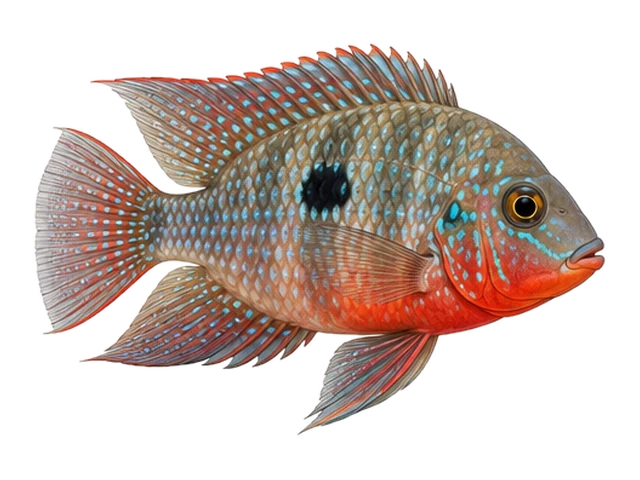
Open substrate spawner: eggs are laid on a flat rock, driftwood or a broad leaf, and both parents guard them; care of the fry continues for several weeks.
Buy a group and let pairs form.
A 30-40 gallon (110-150 L) tank with caves and flat stones, 24-27 C.
Warm water and good food. Pairs dig pits.
About 100-500 eggs; the fry swim freely about 4-5 days after spawning.
Feed baby brine shrimp, then crushed flake. Parents guard fry.
Hard to sex when young. Adult males grow larger, with longer dorsal and anal fin filaments, and are more intensely coloured, especially when spawning.
Typical for open substrate spawners
Grow up a group and let a pair choose each other. Give them a flat stone or broad leaf.
The pair cleans the stone and lays rows of eggs. Both guard them.
Wrigglers hatch in 2–4 days and are moved to pits by the parents.
Feed baby brine shrimp several times a day. Parents often herd the fry.
Move fry to a grow-out tank before the parents spawn again.
A general guide for this breeding type. Days change with temperature and species.
Grow up a group and let a pair choose each other. Give them a flat stone or broad leaf.
Set up a virtual breeding tank and see what would likely happen.
An educational estimate from the breeding rules, not a promise.