

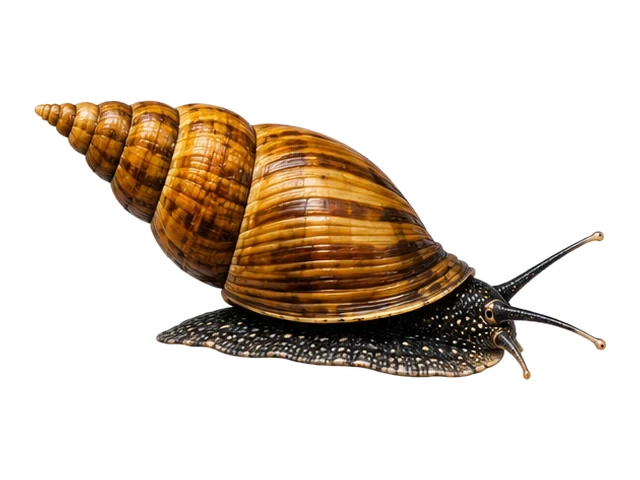
Live-bearing (ovoviviparous): the female broods embryos in a uterine brood pouch and releases one (sometimes up to three) large, fully shelled young at a time, each in a white egg capsule that dissolves almost at once. Breeds slowly in the aquarium if both sexes are present.
Keep 3-5 in a group and let them pair up.
40 L tank with hard alkaline water, rocks, wood and a sand base.
Stable warm water and regular feeding.
One large young at a time (LiveAquaria says 1-3), released in a white egg capsule; newborns can be almost 2 cm (0.8 in) long.
Baby snails look like adults and graze on biofilm; leave them in the tank.
One breeding tank for the giant gold rabbit snail, drawn to scale from the breeding guide.
Water: 24–29 °C · pH 7.5–8.5 · hard water · sand bottom
A plan from the breeding guide and an adult size of 7.5 cm. Tank shape is a standard 2 : 1 : 1.2 box, at least 6 adult lengths long. Check each step in the guide above.
A 120 cm rack for breeding the giant gold rabbit snail in numbers.
In total: 4 tanks, about 240 L of water. A litre of water weighs about 1 kg, so check that the floor and rack can take the weight.
Sizes are worked out from the breeding tank in the guide. Tanks fit a standard 120 cm rack when they can; bigger tanks go on their own stands.
Separate sexes, but males and females cannot be told apart by eye; buy a group of 5 or more to breed.
Typical for snails
Clutches appear on glass, plants or above the waterline.
Baby snails hatch in about 2–4 weeks. Too many? Feed less.
A general guide for this breeding type. Days change with temperature and species.
Clutches appear on glass, plants or above the waterline.
Set up a virtual breeding tank and see what would likely happen.
An educational estimate from the breeding rules, not a promise.