

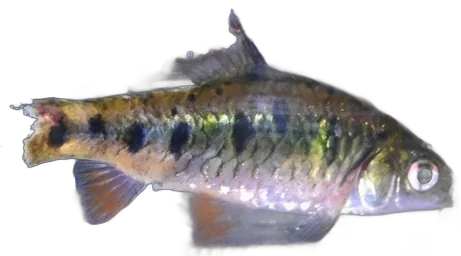
Breeding the gold barb
Easy egg scatterer that spawns in the early morning. Use a separate, smaller tank with mature water; adults eat the eggs.
Step by step
Buy 6 or more and let them pair up.
40 L tank with fine plants or mops. Spawning grate helps.
Warm water change and good live foods.
Eggs hatch in 24-48 hours and fry are free-swimming about 24 hours later.
Feed infusoria or liquid food for days 1-3, then baby brine shrimp and microworms. Grow out with frequent water changes. Sort by size to cut losses.
- Leaving parents with eggs
- Too little cover
- Overfeeding
Male or female
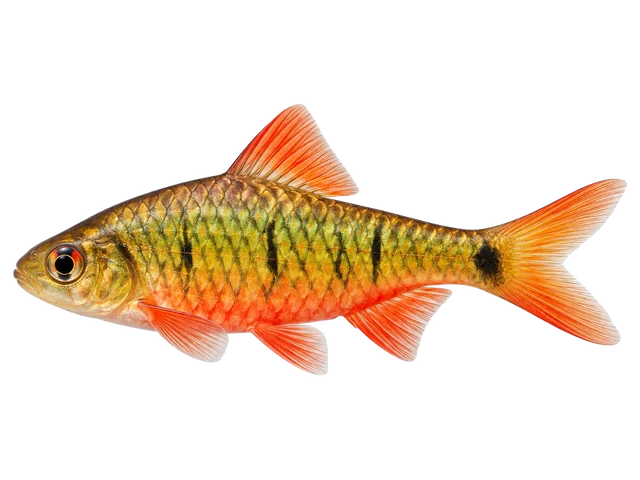
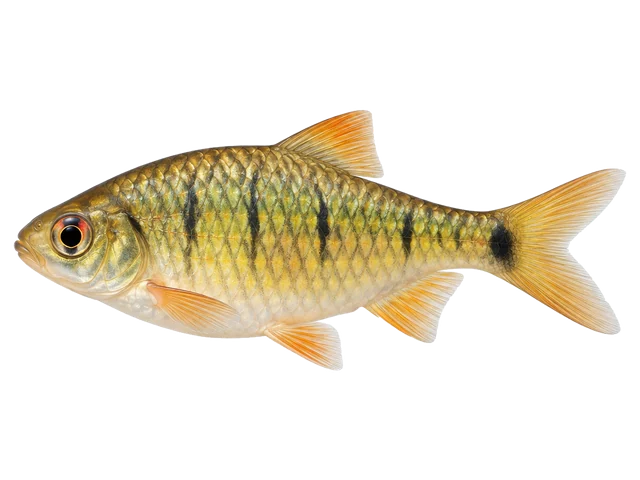
Adult females are rounder-bellied and grow slightly larger than males.
Can I breed it in my tank?
- Use a separate small tank with a sponge filter and spawning mops, so the eggs aren't eaten.
- Good for a first breeding project.
Day-by-day plan
Typical for egg scatterers
- 14 days beforeCondition the parents
Feed live or frozen food twice a day. Keep males and females apart if you can.
- Day 0Spawning
Eggs are scattered over mops or fine plants, often at first light. Remove the parents straight after.
- Day 1Eggs hatch
Most eggs hatch in 1–2 days. Keep the tank dim and remove white (fungused) eggs.
- Day 4Free swimming, first food
Fry use up the yolk and start swimming. Feed infusoria or liquid fry food several times a day.
- Day 8Baby brine shrimp
Switch to newly hatched brine shrimp or microworms. Start small, daily water changes.
- Day 21Crushed flake
Add finely crushed flake. Sort fry by size so the big ones don't eat the small ones.
- Day 60Ready to move
Most small fish reach about 2 cm in 2–3 months and can join the main tank.
A general guide for this breeding type. Days change with temperature and species.
Simulator: guided
Feed live or frozen food twice a day. Keep males and females apart if you can.
Simulator: try it yourself
Set up a virtual breeding tank and see what would likely happen.
- Without live or frozen food the parents aren't in breeding condition.
An educational estimate from the breeding rules, not a promise.