

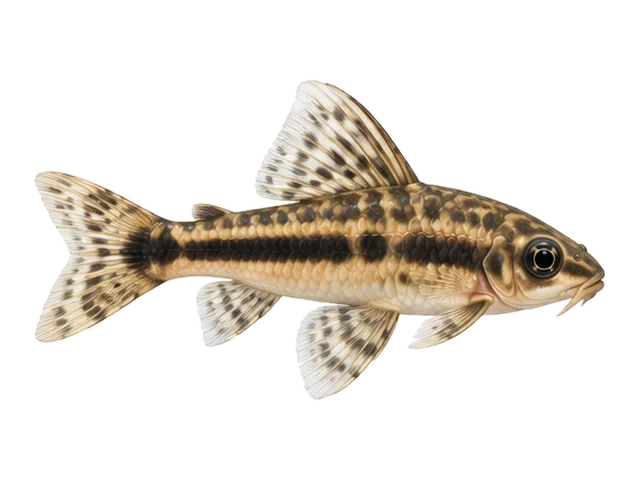
Rarely bred; wild-caught fish dominate.
Keep a group with a mix of sexes and feed lots of algae to bring them into condition.
40 L tank with fine sand, dense plants, some tannins and a gentle current.
Cool, fresh water changes and plenty of biofilm and algae feeding.
Tiny sticky eggs are laid on glass or leaves in small batches; adults do not guard them.
Fry feed on biofilm and powdered spirulina; very prone to starvation, so keep a mature algae-rich tank.
Mature males have much longer pelvic fins, reaching past the start of the anal fin.
Typical for egg scatterers
Feed live or frozen food twice a day. Keep males and females apart if you can.
Eggs are scattered over mops or fine plants, often at first light. Remove the parents straight after.
Most eggs hatch in 1–2 days. Keep the tank dim and remove white (fungused) eggs.
Fry use up the yolk and start swimming. Feed infusoria or liquid fry food several times a day.
Switch to newly hatched brine shrimp or microworms. Start small, daily water changes.
Add finely crushed flake. Sort fry by size so the big ones don't eat the small ones.
Most small fish reach about 2 cm in 2–3 months and can join the main tank.
A general guide for this breeding type. Days change with temperature and species.
Feed live or frozen food twice a day. Keep males and females apart if you can.
Set up a virtual breeding tank and see what would likely happen.
An educational estimate from the breeding rules, not a promise.