

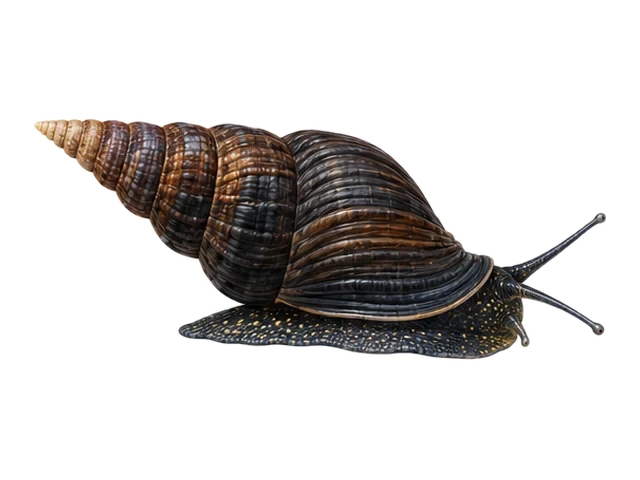
Live-bearing (ovoviviparous): young develop in a uterine brood pouch and are released one at a time as shelled juveniles, so numbers rise slowly.
Buy a group of 5-8. Sexes are separate.
A 60-100 L tank with sand, rocks, driftwood and warm, hard, alkaline water of 26-30 C.
Warm, stable water and good food.
No eggs are laid in the open: the female carries embryos in a brood pouch (1-14 at a time in T. sarasinorum) and releases single shelled juveniles, which in some species are nearly 2 cm.
Young eat veggies, algae and sinking foods. Growth is slow.
Separate sexes (not hermaphrodites) but males and females look alike from outside; keep several to get both sexes.
Typical for snails
Clutches appear on glass, plants or above the waterline.
Baby snails hatch in about 2–4 weeks. Too many? Feed less.
A general guide for this breeding type. Days change with temperature and species.
Clutches appear on glass, plants or above the waterline.
Set up a virtual breeding tank and see what would likely happen.
An educational estimate from the breeding rules, not a promise.