

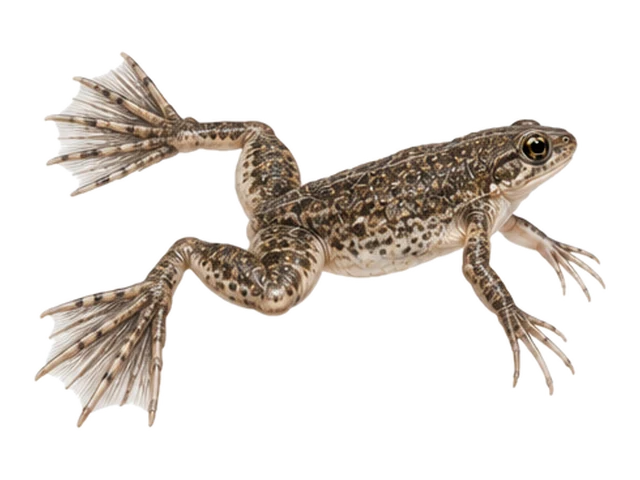
Mates in amplexus, usually at night; the female lays eggs one at a time at the water surface. H. curtipes tadpoles are small predators that wait at the surface for live prey.
Keep 3-4 frogs together and watch for the male's night-time humming and amplexus.
20-40 L low-water tank (15 cm), plenty of floating plants, a gentle sponge filter and no fish.
Lower the water, then top up with slightly warmer water to mimic the rainy season; feed well beforehand.
20-100 floating eggs, hatching in about 2-3 days.
Tadpoles need infusoria then brine shrimp nauplii or microworms for weeks; many die without constant live food. Remove adults.
One breeding tank for the zaire dwarf frog, drawn to scale from the breeding guide.
Water: Unknown
A plan from the breeding guide and an adult size of 3.3 cm. Tank shape is a standard 2 : 1 : 1.2 box, at least 6 adult lengths long. Check each step in the guide above.
A 120 cm rack for breeding the zaire dwarf frog in numbers.
In total: 6 tanks, about 200 L of water. A litre of water weighs about 1 kg, so check that the floor and rack can take the weight.
Sizes are worked out from the breeding tank in the guide. Tanks fit a standard 120 cm rack when they can; bigger tanks go on their own stands.
Females are larger than males (about 33 mm vs 24-28 mm SVL). Males of the close relative H. boettgeri have a small gland behind each front leg and call at night; this is not documented separately for H. curtipes.
Typical for frogs, newts and turtles
Needs a special setup. Read the species guide first.
A general guide for this breeding type. Days change with temperature and species.
Needs a special setup. Read the species guide first.
Set up a virtual breeding tank and see what would likely happen.
An educational estimate from the breeding rules, not a promise.