

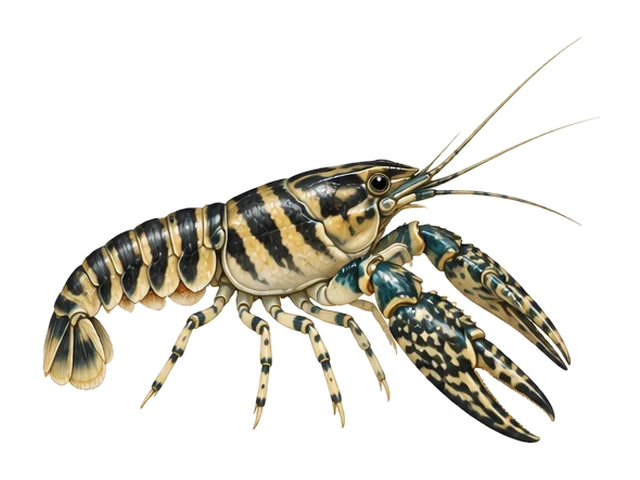
Direct developer: the female carries the eggs under her tail for about 4-6 weeks; 40-80 fully formed young hatch and stay with her a few days. Young grow slowly and can be cannibalistic, so give many hides and leaf litter. In the wild, breeding seems to happen in the wet season.
One male and 2 females in a large tank with hides.
Large tank with caves and sand; separate female when berried.
Seasonal temperature changes and good feeding.
Eggs carried under the female's tail for about 4-6 weeks; 40-80 young hatch.
Juveniles are tiny crayfish; feed meaty foods and keep separate to prevent cannibalism.
One breeding tank for the zebra crayfish, drawn to scale from the breeding guide.
Water: 20–25 °C · pH 7–8 · sand bottom
A plan from the breeding guide and an adult size of 10 cm. Tank shape is a standard 2 : 1 : 1.2 box, at least 6 adult lengths long. Check each step in the guide above.
A 120 cm rack for breeding the zebra crayfish in numbers.
In total: 3 tanks, about 490 L of water. A litre of water weighs about 1 kg, so check that the floor and rack can take the weight.
Sizes are worked out from the breeding tank in the guide. Tanks fit a standard 120 cm rack when they can; bigger tanks go on their own stands.
Males have bulkier claws. Reliable check: genital openings at the base of the walking legs - in males at the 5th (last) pair, in females at the 3rd pair.
Typical for shrimp
Eggs are carried under the tail. Keep the water stable and don't move her.
After about 2–4 weeks tiny shrimp hatch. They graze on biofilm and moss.
Keep a sponge on the filter intake. Feed powdered shrimp food a little at a time.
They can breed themselves at about 3 months.
A general guide for this breeding type. Days change with temperature and species.
Eggs are carried under the tail. Keep the water stable and don't move her.
Set up a virtual breeding tank and see what would likely happen.
An educational estimate from the breeding rules, not a promise.