

Variations
3 kinds · tap one for a closer look
Paradise fish
Males fight each other; may hunt small fish.
- Paradise fish eats animals up to about 2.5 cm. Neon tetra only grows to 2.5 cm.
- Only a narrow temperature range suits both: 21–22 °C.
- They need different temperatures (10–22 °C vs 23–29 °C). No setting suits both.
- They need different temperatures (10–22 °C vs 24–28 °C). No setting suits both.
- Only a narrow temperature range suits both: exactly 22 °C.
- Only a narrow temperature range suits both: exactly 22 °C.
144 species in our list are a good match.
Care and water
Behavior
Males fight each other; may hunt small fish.
Food
Flakes, frozen foods.
Tap a food to see what it is.
Male or female
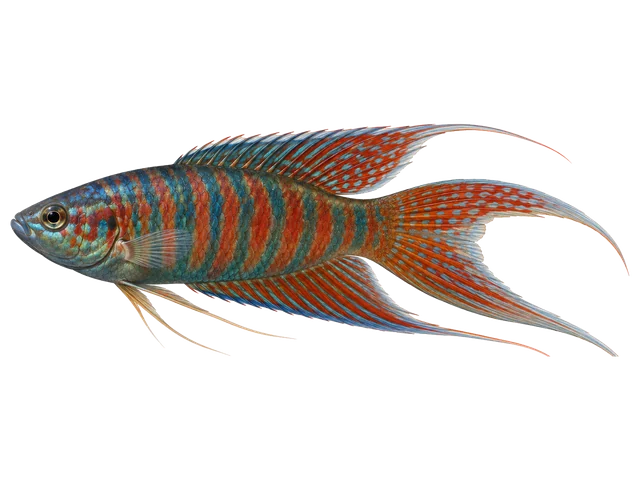
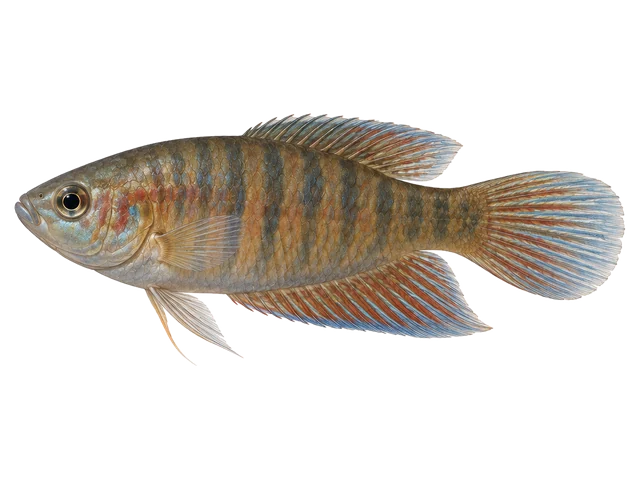
Males are larger than females and have extended soft rays in the dorsal, anal and tail fins.
Health
Common problems. Tap one to see the signs. This is a guide, not a diagnosis.
Breeding
Bubble-nester · Easy
Bubble-nester. The male builds the nest and tends the eggs; remove the adults once the fry swim freely, as the male loses interest. Soft water and a slightly raised temperature help trigger spawning.
Pair up a male and female from a group. They spawn readily in cool water.
A 20 gallon (75 L) tank with floating plants, a lid and 22-26 C water. No heater needed in warm rooms.
Slightly warmer water and good live foods. The male builds a nest under floating plants.
Several hundred eggs per female; Seriously Fish says they hatch in about 3-4 days, then the fry stay in the nest until the yolk sac is absorbed.
Feed infusoria, then baby brine shrimp. Remove the female after spawning and the male when fry swim free.
- Leaving the female with an aggressive male
- Cold drafts above the water
- Too many males
Where it lives in the wild
The story of the paradise fish
Brought to Europe in 1869 (France), the first ornamental fish after the goldfish. Usually fine in an unheated aquarium.
Linnaeus described the paradise fish in 1758. It was one of the first ornamental fish kept in Europe, reaching Paris in 1869, where it was soon bred in aquariums. Hardy and able to live without a heater, it also played a big part in the early popularity of fishkeeping.
First described by Carl Linnaeus in 1758.
- It was one of the first tropical aquarium fish kept in Europe.
- It can tolerate cool, unheated water.
- Males build bubble nests to hold the eggs.
Sources
16 facts checked with sources
- Scientific name
Valid name; originally described as Labrus opercularis Linnaeus, 1758. Seriously Fish lists old synonyms such as Macropodus chinensis, M. venustus and M. baviensis, and separates it from congeners by its forked tail and 7-11 blue body bars.
FishBase: Macropodus opercularis summary - Familycorrected
Legacy has no family field; sourced value recorded.
FishBase: Macropodus opercularis summary - Sizecorrected
Both are SL (standard length). FishBase 6.7 cm SL (preferred for size); Seriously Fish 8.0 cm SL. Wikipedia (citing FishBase) says most are about 5.5 cm SL. Males have long fin extensions, so total length with fins is larger. Legacy 10 cm is above both.
FishBase: Macropodus opercularis summary · Seriously Fish: Macropodus opercularis - Temperaturecorrected
Sources disagree: FishBase 16-26 matches legacy; Seriously Fish (preferred for husbandry) gives 10-22 and says it benefits from a cool winter period. A subtropical fish; 16-22 satisfies both.
Seriously Fish: Macropodus opercularis · FishBase: Macropodus opercularis summary - pHSeriously Fish: Macropodus opercularis · FishBase: Macropodus opercularis summary
- Hardnesscorrected
Legacy has no hardness; Seriously Fish range recorded.
Seriously Fish: Macropodus opercularis · FishBase: Macropodus opercularis summary - Smallest tankcorrected
80 x 30 cm base x 30 cm height = 72,000 cm³ = 72 L, the minimum for a single pair. Legacy 80 L is close and slightly more generous.
Seriously Fish: Macropodus opercularis - Group size
No minimum group size given. If keeping more than one, Seriously Fish advises two or more females per male; males should not be kept together unless the tank is very large (matches legacy 'max1' one male).
Seriously Fish: Macropodus opercularis - Temperament
Wikipedia's claim that it eats fish under 1.8 cm is marked citation needed.
Seriously Fish: Macropodus opercularis · Wikipedia: Paradise fish (cites FishBase; Alderton 2019; Kolle 2008) - Swimming level
No source names a swimming level; FishBase's habitat type 'pelagic' is not an aquarium zone.
FishBase: Macropodus opercularis summary - Care levelcorrected
Seriously Fish rates it Moderate (mostly due to male aggression); legacy had 1 (easy).
Seriously Fish: Macropodus opercularis - Where it livescorrected
Legacy has no range field. Vietnam/Laos detail is from Seriously Fish. IUCN: Least Concern (assessed 02 September 2010, per FishBase).
Seriously Fish: Macropodus opercularis · FishBase: Macropodus opercularis summary - Male or female
Brighter colour in males (legacy) is not stated by the source but is consistent.
Seriously Fish: Macropodus opercularis - Breeding
Matches legacy 'bubble nest builder'.
Seriously Fish: Macropodus opercularis · Wikipedia: Paradise fish (cites FishBase; Alderton 2019; Kolle 2008) - Eggs and youngcorrected
'Several hundred' is consistent with legacy 100-500. Hatch time conflicts: legacy 1-2 days vs Seriously Fish 3-4 days; no second reliable source found, so the Seriously Fish figure is recorded.
Seriously Fish: Macropodus opercularis - Story
Seriously Fish credits a French soldier named Gerault with the import and Pierre Carbonnier of Paris with breeding the survivors; Wikipedia (citing Alderton 2019) credits Carbonnier with the import.
FishBase: Macropodus opercularis summary · Seriously Fish: Macropodus opercularis