

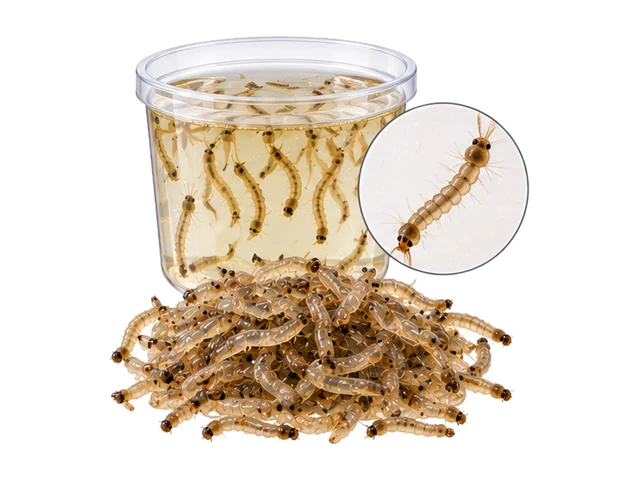
Aquatic larvae ('wrigglers') and pupae of mosquitoes. About 50% protein, with all essential amino acids. Larvae hang just under the water surface breathing through a tube.
For: Fish that take prey at or near the surface; rainbowfishes are a named example and respond strongly.
How to feed: Raise larvae yourself from egg rafts kept in small covered jars rather than leaving open tubs, and feed only as many as will be eaten: leftover larvae turn into biting adults. Surplus can be frozen. Wild collection risks bringing in disease and pests.
Careful: Human health risk: larvae that escape being eaten become adult mosquitoes, some of which carry diseases (encephalitis, malaria and others). Never leave larvae to hatch; feed all, refrigerate or freeze surplus. Breeding mosquitoes may break local mosquito-control rules (not checked).
Examples you may see in shops: Culex larvae (egg rafts on water). Not endorsements.
0 species
5 facts checked with sources