TankMatesTankMates
  • Explore
  • Encyclopedia
  • Identifier
  • Tank Planner
  • Tank Mates
  • Games
  • World Map
Sign in
ExploreSpeciesIdentifierPlanner
TankMatesTankMatesFind fish that get along. Plan your tank. See real local prices.© 2026 TankMates · hello@tankmates.io
EncyclopediaFish identifierTank MatesCompareAsk FinnTank PlannerTank templatesPlantsCare libraryBreedingPond FishGamesWorld MapDesign StudioCommunityShops & servicesMy profileNotificationsPremiumPrivacyTermsPicture credits
Care library / Health
Health guide, not a diagnosis · Serious if left

Green alga on shrimp (Cladogonium)

Also called Green fungus, Ellobiopsis, Cladogonium, Cladogonium kumaki, Cladogonium ogishimae, green fungus (misnomer), ellobiopsid (misnomer)

Facts checked against sources on 16 Oct 2026. See sources

Signs

  • Green, yellow-green or brownish tufts/filaments attached mainly on the pleopods (swimmerets under the abdomen), less often on the walking legs, gill chambers or rostrum
  • Damaged cuticle where it grows; eggs held on affected pleopods can be destroyed or go mouldy
  • Shell damage (melanised marks) visible on shed moults

Cause

The 'green fungus' of dwarf shrimp is not a fungus and, per the peer-reviewed literature, not an ellobiopsid: it is the green alga Cladogonium (C. kumaki on Neocaridina davidi; C. ogishimae on Caridina, Macrobrachium and Paratya), an epibiotic/ectoparasitic alga whose colourless rhizoids penetrate the cuticle into the tissue below, with green to greenish-yellow or greenish-brown zoosporangia/zoospores. Its exact placement is unsettled (Cladophorales: Pithophoraceae on morphology; DNA points toward Trentepohliales). True ellobiopsids (Ellobiopsis, Thalassomyces) are alveolate protists, close to dinoflagellates, that parasitise crustaceans, mostly copepods and marine crustaceans. No source found gives a tested treatment.

What to do

No medicine has been tested. The researchers removed the alga from the shrimp by hand (shrimp sedated) and then held them in separate quarantine tanks; shrimp survived except where the alga covered much of the body. Moulting removes only part of it (the thallus can stay attached), so shrimp will not reliably clear it alone. Isolating affected shrimp, as the legacy text says, is consistent with this, but the paper's control method is manual removal.

If a fish is badly ill, talk to an aquatic vet.

Prevention

It travels with traded shrimp (most common in shrimp from farm ponds, least in aquarium-bred stock). Inspect new shrimp, especially the pleopods, and check freshly shed moults for damage; keep new arrivals separate until checked.

Sources

6 facts checked with sources

  • CausecorrectedBauer et al. 2021, Dis Aquat Org 146:107-115: Association of the alga Cladogonium sp. with a multifactorial disease outbreak in dwarf shrimp (Neocaridina davidi) (PubMed 34617516) · Maciaszek et al. 2023, Animals 13:1616: Epibiont Cohabitation in Freshwater Shrimp Neocaridina davidi with the Description of Two Species New to Science, Cladogonium kumaki sp. nov. and Monodiscus kumaki sp. nov. (doi:10.3390/ani13101616) · Silberman et al. 2004, J Eukaryot Microbiol 51:246-252: Ellobiopsids of the genus Thalassomyces are alveolates (PubMed 15134262) · Gomez et al. 2009, Syst Parasitol 74:65-74: The crustacean parasites Ellobiopsis and Thalassomyces form a monophyletic divergent clade within the Alveolata (PubMed 19633933)
  • Other namescorrectedMaciaszek et al. 2023, Animals 13:1616: Epibiont Cohabitation in Freshwater Shrimp Neocaridina davidi with the Description of Two Species New to Science, Cladogonium kumaki sp. nov. and Monodiscus kumaki sp. nov. (doi:10.3390/ani13101616) · Bauer et al. 2021, Dis Aquat Org 146:107-115: Association of the alga Cladogonium sp. with a multifactorial disease outbreak in dwarf shrimp (Neocaridina davidi) (PubMed 34617516)
  • SignscorrectedMaciaszek et al. 2023, Animals 13:1616: Epibiont Cohabitation in Freshwater Shrimp Neocaridina davidi with the Description of Two Species New to Science, Cladogonium kumaki sp. nov. and Monodiscus kumaki sp. nov. (doi:10.3390/ani13101616)
  • How seriousBauer et al. 2021, Dis Aquat Org 146:107-115: Association of the alga Cladogonium sp. with a multifactorial disease outbreak in dwarf shrimp (Neocaridina davidi) (PubMed 34617516) · Maciaszek et al. 2023, Animals 13:1616: Epibiont Cohabitation in Freshwater Shrimp Neocaridina davidi with the Description of Two Species New to Science, Cladogonium kumaki sp. nov. and Monodiscus kumaki sp. nov. (doi:10.3390/ani13101616)
  • What to docorrectedMaciaszek et al. 2023, Animals 13:1616: Epibiont Cohabitation in Freshwater Shrimp Neocaridina davidi with the Description of Two Species New to Science, Cladogonium kumaki sp. nov. and Monodiscus kumaki sp. nov. (doi:10.3390/ani13101616)
  • PreventionMaciaszek et al. 2023, Animals 13:1616: Epibiont Cohabitation in Freshwater Shrimp Neocaridina davidi with the Description of Two Species New to Science, Cladogonium kumaki sp. nov. and Monodiscus kumaki sp. nov. (doi:10.3390/ani13101616)

Species often affected

21 species

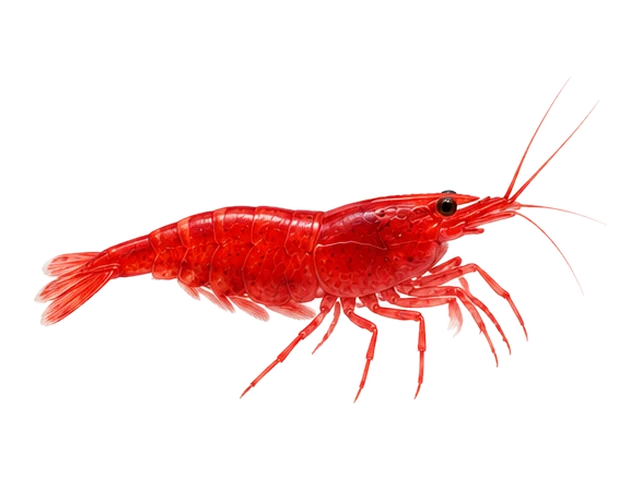
Cherry shrimpNeocaridina davidi
Easy3 cm18–28 °C
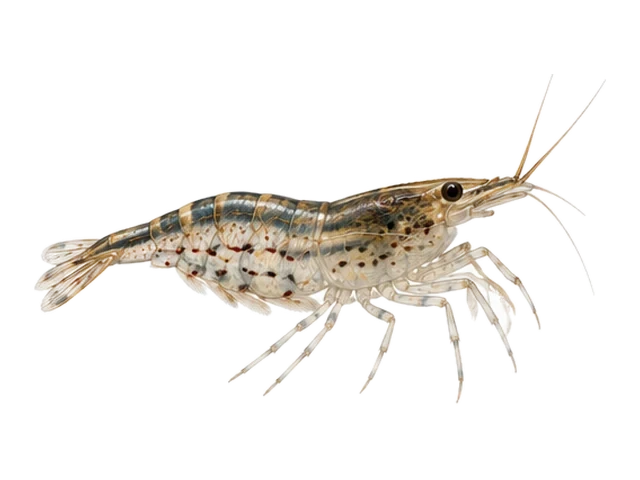
Amano shrimpCaridina multidentata
Easy3.5 cm20–28 °C
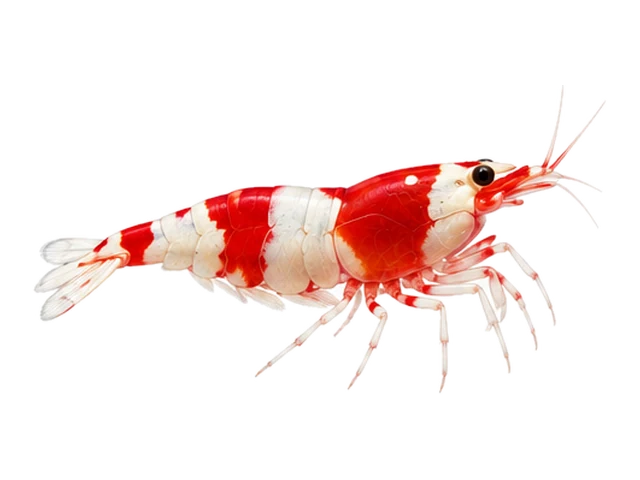
Crystal red shrimpCaridina cantonensis
Moderate3 cm20–24 °C
Ghost shrimpPalaemon paludosus
Easy4 cm20–27 °C
Bamboo shrimpAtyopsis moluccensis
Moderate7 cm23–28 °C
Vampire shrimpAtya gabonensis
Moderate15 cm24–29 °C
Blue bolt shrimpCaridina cantonensis
Moderate3 cm21–25 °C
Taiwan bee shrimpCaridina cantonensis
Hard3 cm21–25 °C
Tiger shrimpCaridina mariae
Moderate3 cm20–25 °C
Cardinal shrimpCaridina dennerli
Hard2.5 cm28–30 °C
Sulawesi spinata shrimpCaridina spinata
Hard2.5 cm28–30 °C
Malawa shrimpCaridina parvidentata
Easy1.5 cm16–30 °C
Red-nose shrimpGracidina gracilirostris
Easy4 cm20–28 °C
Babaulti shrimpCaridina babaulti
Easy4 cm24–28 °C
Ninja shrimpMarosina serratirostris
Easy3 cm24–28 °C
Bumblebee shrimpCaridina sp. (bumblebee shrimp complex; often sold as Caridina cf. breviata)
Moderate3 cm17–24 °C
Singapore flower shrimpAtyopsis spinipes
Moderate7 cm22–28 °C
Giant freshwater prawnMacrobrachium rosenbergii
Moderate32 cm25–30 °C
Whisker shrimpMacrobrachium assamense
Moderate
Zhangjiajie shrimpNeocaridina zhangjiajiensis
Easy
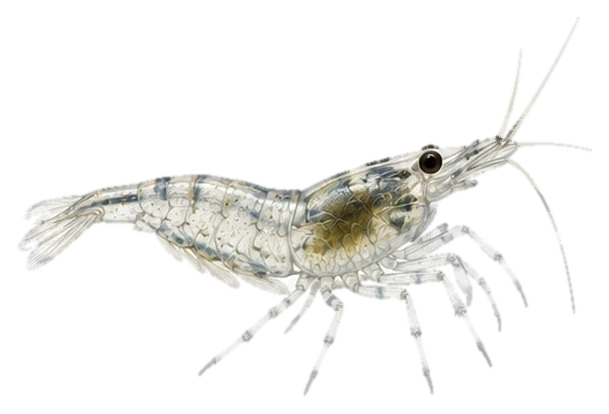
Australian glass shrimpParatya australiensis
Moderate3.5 cm